
… that aren’t about measurements!
Hello! If you’re new to my little corner of the internet, you’re about to learn about something that regular readers will tell you is one of my favorite subjects: swatching!
Why is swatching so important? The most commonly cited reason for knitting up a gauge swatch is to be sure that your finished project is the size you want it to be.
But what if it’s a shawl, or a blanket, or something where size isn’t critical? Can I skip it and cast on?
Well, you could, but please don’t. As exciting it may be to jump in and cast on, knitting a gauge swatch can teach you so much about the project you’re about to start. It’s not just about measurements. Here are 5 things you’ll learn:
1. Do you like knitting it?
Have you ever started a project full of excitement, only to feel that excitement fizzle out the further you worked? I’ve done this, and I can tell you that it’s so discouraging! Maybe you’ve discovered that while the pattern photo looked beautiful, you just didn’t enjoy working it. Maybe you’ve chosen a specific pattern because of it’s fascinating stitch pattern, only to discover that you don’t have the mental energy to work such an engaging design at the moment.
What do you have to lose by knitting a swatch? In a few grams of yarn and just a little bit of time, you can give yourself a good preview of your project. Your gauge swatch is a valuable tool to help you answer questions like:
Is is something you’ll be able to take on the go?
Does it require more concentration than you imagined?
It this a project for now, or a project for later?
2. Does it feel good to knit?
I’m a firm believer that the process of knitting something should be as enjoyable as wearing or gifting the finished item. If it doesn’t feel good to knit, chances are it won’t feel that great when it’s finished either.
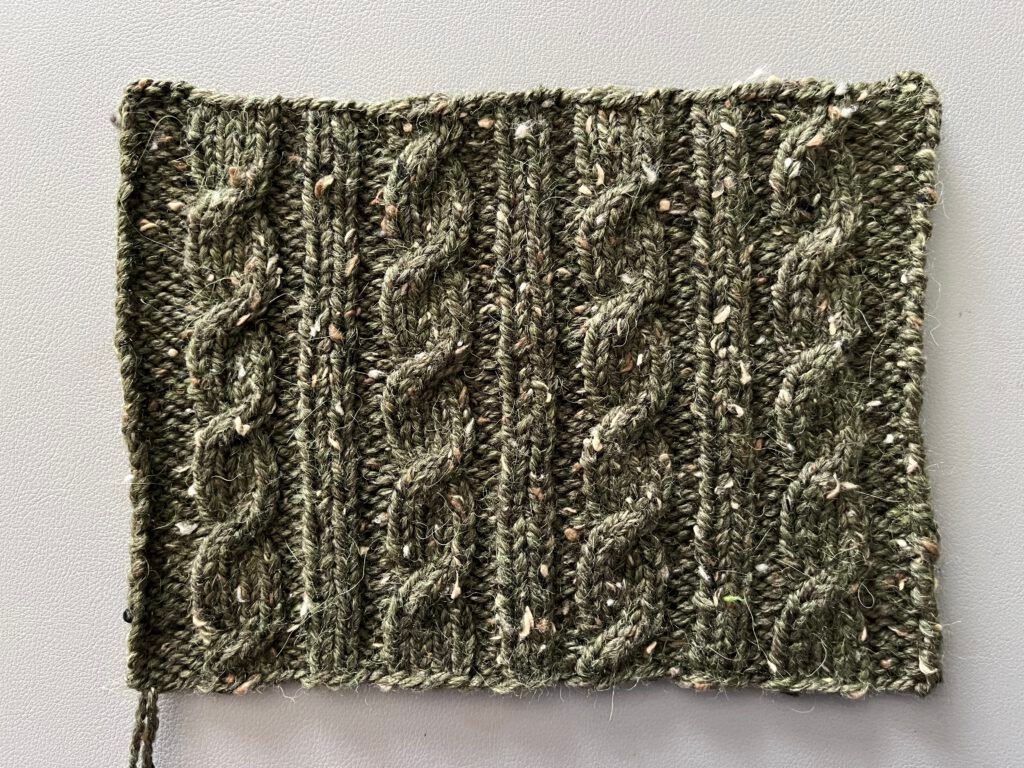
US 9 (5.5mm), from Joined Together Cardigan
We all knit in different ways. We all have different style preferences and needs. Some of us prefer knitting at a looser gauge, some of us prefer to knit tighter. Some of us love our cable needles, while others avoid them as much as possible. Some of us have hands and wrists that need to take frequent breaks or stretch often when working with dense textures or specific fabrics.
Your gauge swatch is a preview. Not only of the finished garment, but the knitting experience, too! Did you enjoy your gauge swatch? Were you plodding along, waiting to have enough rows to cast off and be done already? Or could you happily continue right along? Consider these things when planning your project, and take the opportunity to swatch with different yarns, needles, and knitting styles to find one that you’ll enjoy from cast on to bind off.
3. Do I have the right yarn?
Your pattern may call for specific yarn, but it is always, always up to you! We each have preferences, and working a couple of gauge swatches is a great opportunity to find the right yarn.
What is the right yarn? The one that you love, and gives you the result you’re after. Consider how it feels to knit, but also how it feels to wear. You may spend several months knitting a sweater, but hopefully you’ll be wearing it for years to come. Take the time to make sure you love the yarn!
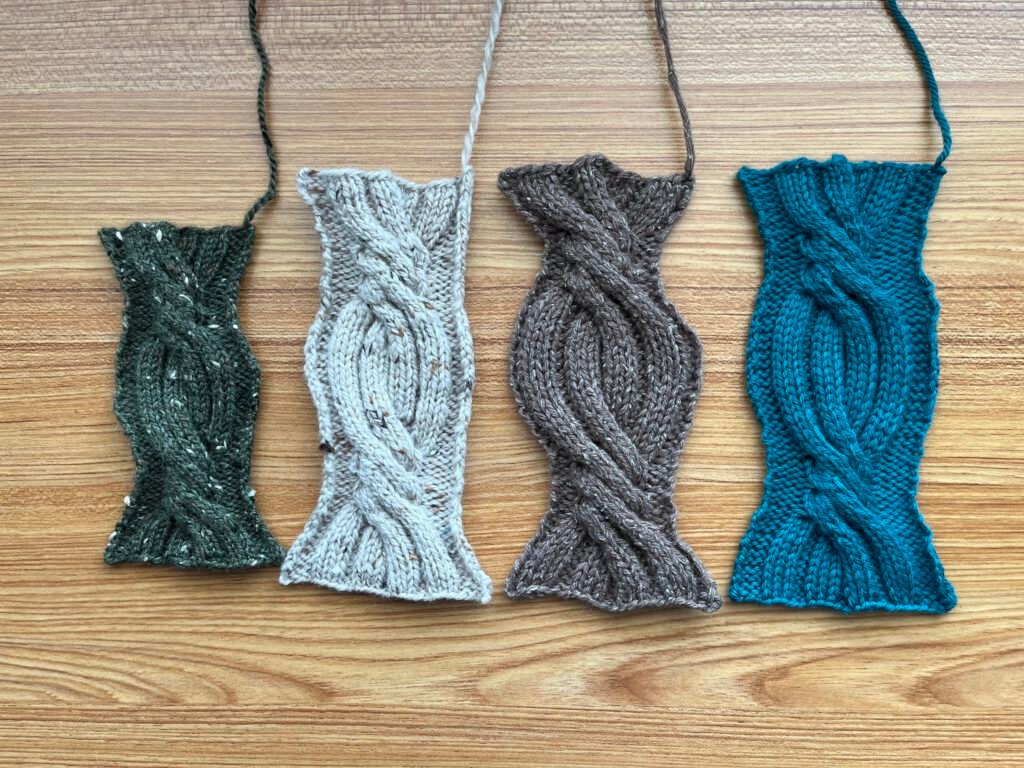
from left to right: KnitPicks City Tweed DK, BC Garn Hamelton Tweed I, KnitPicks Chroma Worsted, Soul Wool Merry Merino 110
I will often “wear” my swatches to be sure they feel good against my skin. If it’s a gift, I’ll ask the recipient to do the same (unless it’s a surprise of course, then I’ll do this test on myself!). I’ll tuck my swatch around the collar of my shirt for two reasons:
- The skin around your neck is sensitive, so it’s a great place to test your yarn’s itchiness. If it doesn’t itch your neck, it probably won’t itch your arms (but you’re always welcome to test there, too!).
- Does the color complement your face the way you anticipated? We all have our color preferences, and with most other decisions in knitting, there’s no right answer. Trying to choose between a blue and a green? How does it look next to your face? What about a bright jewel tone shade of purple or a lighter heathered purple? Again, compare them to your face. Which one do you prefer? Keep in mind again, that there’s no right answer, only preference. But you’ll want to get a good idea of how you will look in your garment.
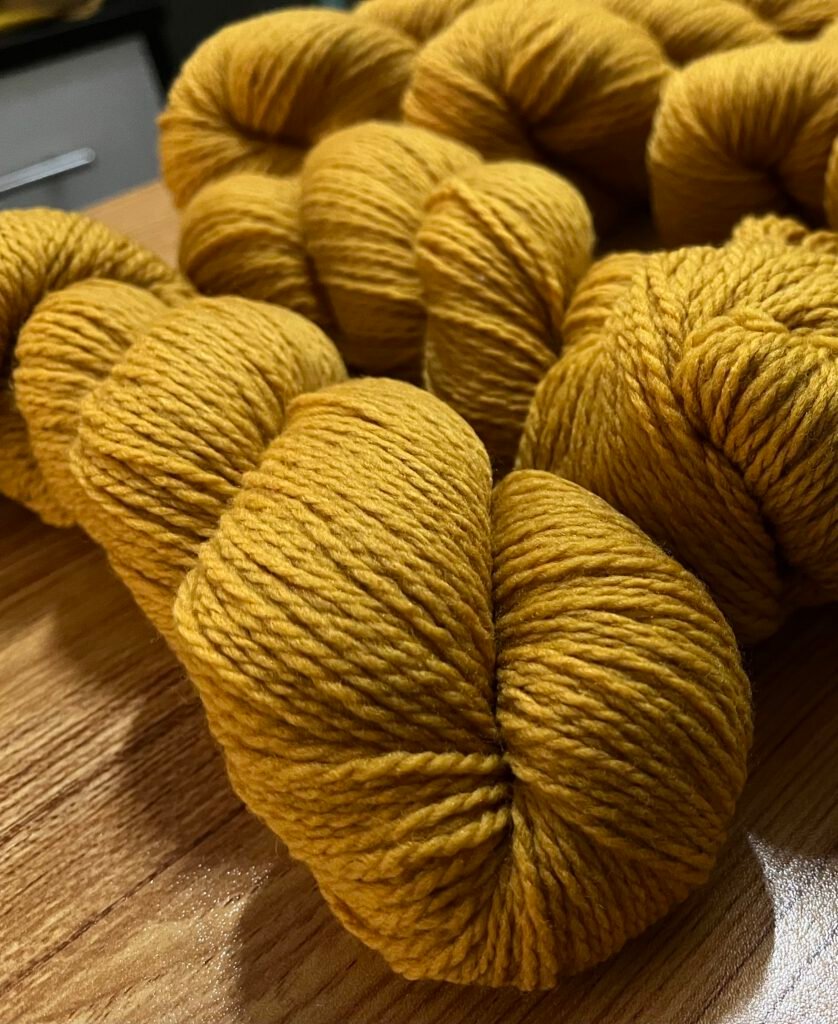
Note: If you love yellow, and it looks great on you, wear it! If you love yellow, and it makes your skin look a little washed out, you can still wear yellow! You love it, and you’ll be more satisfied with a color you love, than one you’ve chosen simply because it “suits” you.
It’s all a matter of preference, anyway!
4. Which needles are best?
There are so many needle choices out there! My personal favorites are stainless steel – more specifically, my interchangeable stainless steel set. But there are times when they just aren’t the right tools for the job. Consider your yarn, and how it interacts with the needles.
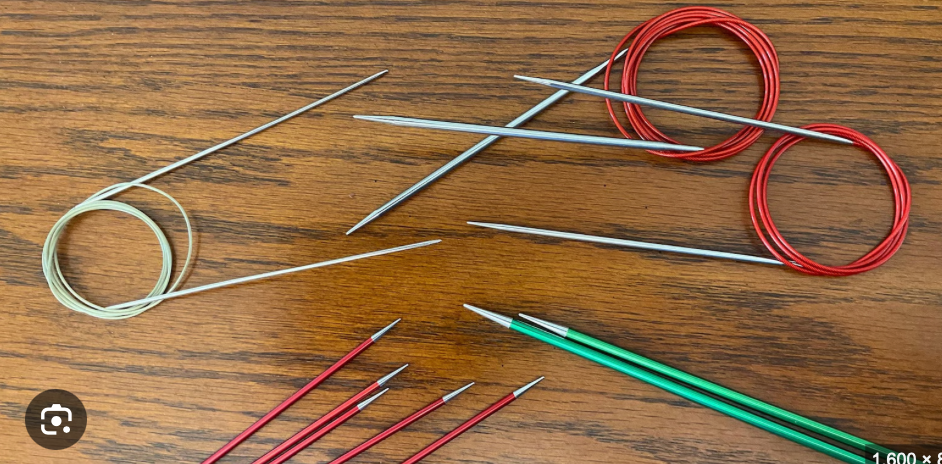
Stainless steel needles, and other metal needles are smooth and slick – excellent for grabby yarns like wool. Bamboo and wooden needles have a bit more grip, and might be a better choice for slippery yarns like alpaca and cotton (depending how it’s spun). It’s again a matter of preference, but take the opportunity to see what you and your hands like best.
Recently I performed an accidental experiment. I was knitting the Tammy Tank by Natalie Warner with a bamboo and cotton blend yarn, and US #7 (4.5mm) needles. I wanted to knit the front and back pieces at the same time (not seamless, but work on both pieces at once) so I could gauge how well the top front and back pieces would fit. So I used two #7 needles. No problem! Until I really, really wanted one of those #7 needles for another project. I swapped out one of the stainless steel needles on my tank top for a bamboo needle.
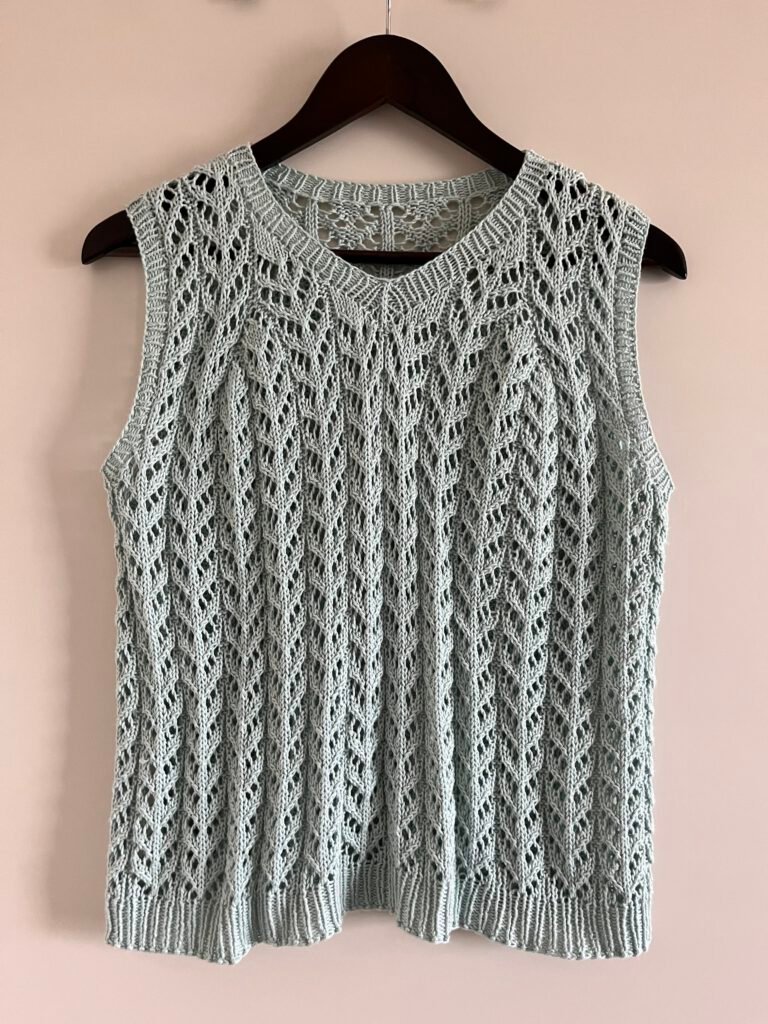
US 7 (4.5mm), Premier Yarns Bamboo Fair in Spa
It was a bigger difference than I imagined! For starters, there was certainly more grip with the bamboo needles. I kind of liked this though, feeling that my hands could be more free and then yarn could hold tension itself. The other thing I noticed was that even though I knit exactly the same number of rows on the front and back pieces, the piece I knit with the stainless steel needles had a looser gauge. I didn’t notice this until I was blocking, and I don’t think it’s noticeable in the finished garment, but when I blocked to my measurements, the piece I worked with the stainless steel needles had a good bit more slack. Fortunately it was lace, so there was a lot of leeway but I’ll try to have a bit more patience next time I’m tempted to swap out one type of needle for another!
#5 What’s the best way to wash my finished project?
There’s a lot less heartbreak when you ruin a swatch, than when you ruin a sweater! The first four items above treated your swatch as a preview to your finished project, but this point treats your swatch more like practice.
Especially if you’re working with a blended yarn (superwash wool and cotton, or alpaca and wool), there’s no hard and fast rule as to how to wash your garments. I personally prefer to hand wash my knits, and I would recommend it to everyone, but I know that this isn’t always realistic.
Use your swatches to practice! How much abrasion can they handle? Does the water need to be cold or is lukewarm okay? Did the color bleed, and if so, how many soaks until it stopped? If you’re brave enough to try putting it in your washing machine, how did it fare?
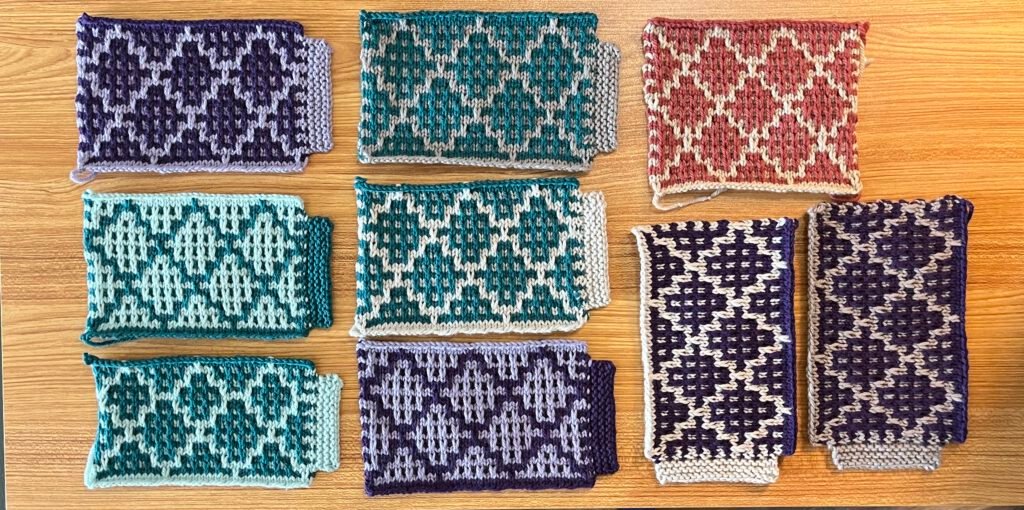
US #7 (4.5mm), Soul Wool Merry Merino 110 in various colors
The more swatches you knit (with the same yarn, at least), the more opportunities you’ll have to practice different techniques. And the more comfortable you’ll be washing your completed garment.
Please don’t ever put non-superwash wool in the washing machine! It will probably felt, and you’ll lose your garment!
This is by no means an exhaustive list!
Other practical uses for your gauge swatch include:
- Practice picking up stitches
- Take it with you when you shop for buttons
- Future project inspiration
- Seaming practice
- Testing out color combinations
I’m sure there are many more things you can learn from your gauge swatches, and I’d love to hear more ideas! How do you use your swatches?
Enjoy this post?
Bookmark this page (Cmd+D or Ctrl+D) or share it with a friend!