
Each year the Knitting History Forum hosts an annual conference, and for the past couple of years I’ve been able to attend on Zoom. This year a topic came up that has really given me some food for thought: authenticity. The presenting scholars have researched origins and traditions in places like Shetland and Fair Isle. Attendees chimed in with their own experiences with traditional garments from the Faroe Islands, and their experiences with Native American textiles.
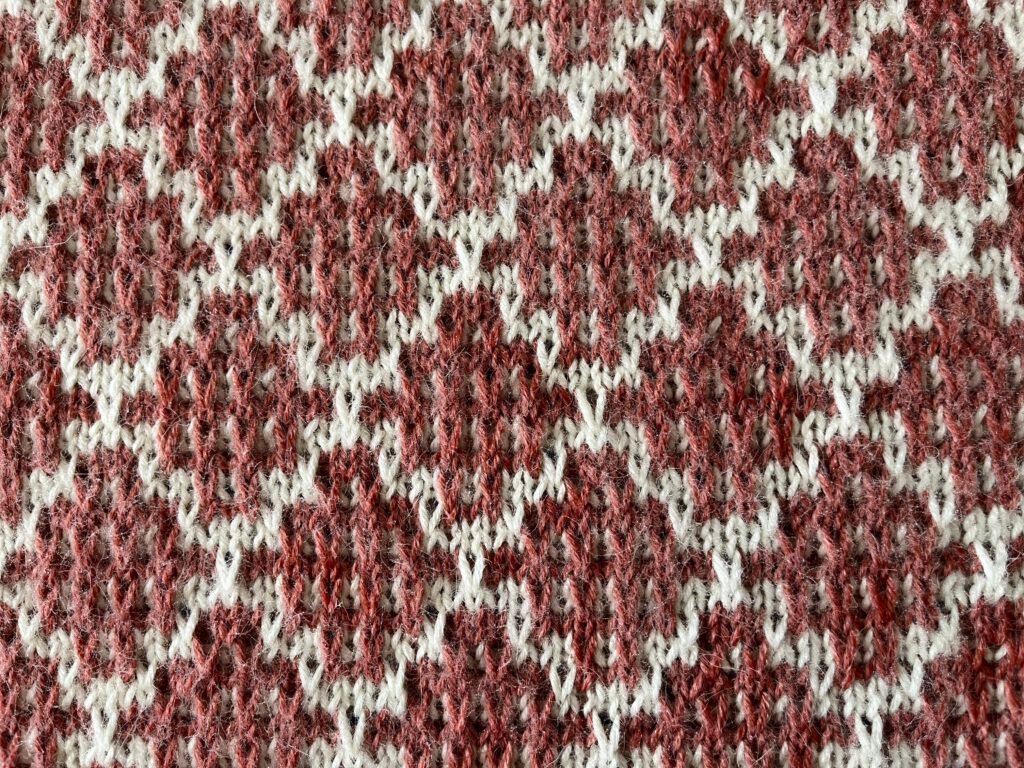
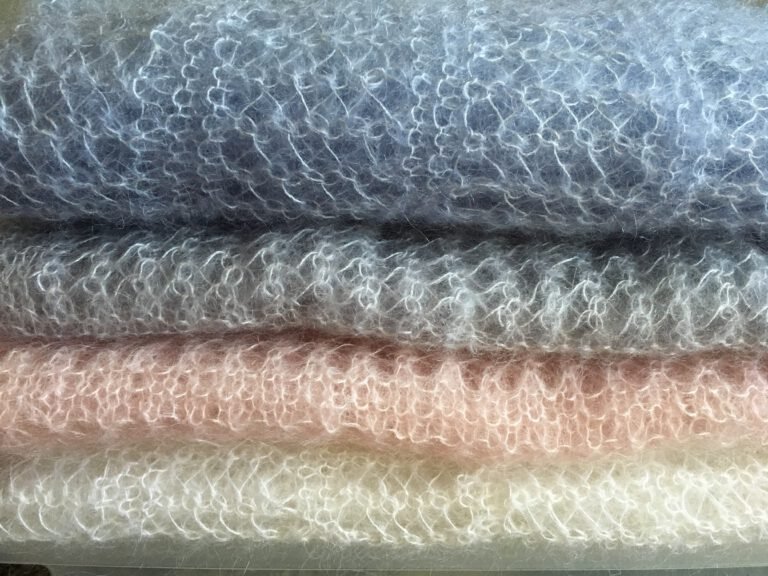
in Purl Soho Season Alpaca in River Pink and Heirloom White
This notion of authenticity has led me down a bit of a rabbit hole. It’s got me thinking of how, in my own mind, Shetland shawls “should” be knitted in garter stitch. Icelandic sweaters “should” use wool from Icelandic sheep. Ganseys “should” have gussets. These kinds of things.
This might be an unpopular opinion, but hear me out.
If we strive to do things the authentic way, are we truly doing our best to embrace beauty and excellence, if we approach authenticity for the sake of authenticity itself?
If we, as modern knitters, have tools, materials, and skills that help us knit something more beautiful and more excellent, wouldn’t that be better?

Diego Delso, CC BY-SA 4.0 https://creativecommons.org/licenses/by-sa/4.0, via Wikimedia Commons
This is absolutely not a criticism of authentic or historical knitting! No way! It’s precisely these works that have allowed our art to develop into what it has become today. Architects study historic buildings. Artists study masterpieces of previous generations. There’s so much to learn from what came before us, and we’d be foolish to neglect it. There are some incredibly beautiful authentic or historical pieces out there, and so, so much that we can learn from or be inspired by!
The answer to this question depends entirely on the situation. Who is it for? What purpose will it fulfill? Are the techniques, materials, and patterns right for that particular piece?
As a musician who has played in early music ensembles, this is a question that has applies here, too. To play a Bach Sonata “authentically” could mean to study and implement ornamentation (how is the melody is decorated) used by 18th century performers, and use instruments that are replicas of what were available to these performers in their day. This might be a harpsichord instead of a piano, a wooden transverse flute in the place of a silver flute with modern fingerings and a much wider dynamic range, or a viol da gamba, the six (or seven) stringed relative of the modern cello.

Metropolitan Museum of Art, CC0, via Wikimedia Commons
I’m not here to say one way or another. Because it isn’t a black and white question. “What is best” isn’t the full inquiry. “What is best in order to produce the most beautiful and excellent piece of music for how, when, where, and for whom, the piece will be played,” is the question from which to get the answer. Similarly for knitwear, “What is best in order to produce the most beautiful and excellent garment or accessory, that best suits the person, occasion, or purpose it will have?”
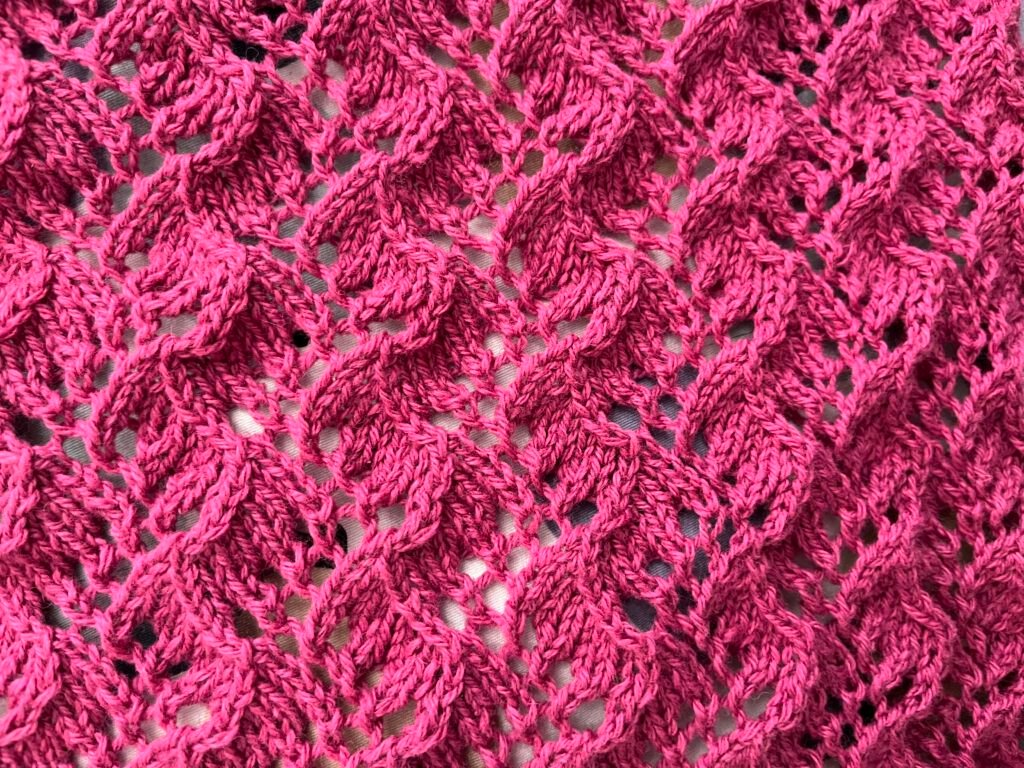
It may be a different answer every time you ask the question! If a Shetland shawl knit with traditional stitch patterns and pure Shetland wool fits the bill, go for it! On the other hand, if the recipient loves bold colors and finds wool uncomfortable, an alternative or “Shetland-ish” shawl may be just the thing.
Traditional and authentic garments and patterns can be stunningly beautiful, and provide an excellent representation of the people who made them. I think it’s also possible to honor these people, and their skill and artistry, by knitting up that “Shetland-ish” shawl, in the perfect color and fiber, which will be worn more often, and with much more joy, than a traditional or “authentic” piece.
I’d encourage you to think about this, and I’ll leave you with musical examples from my favorite composer, Johann Sebastian Bach. Have a listen to some of his music on period (authentic) instruments, and compare it to the same pieces played on modern instruments. Can you picture settings where the period instruments might be best? What about modern instruments? The Goldberg Variations (BWV 988) is a good place to start—there are numerous recordings online, some on piano and some on harpsichord. There are also some excellent recordings of Bach’s flute music played on the traverso, the ancestor of our modern flute. I’d recommend Partita in A Minor (BWV 1013) to start with. Consider situations where the wooden traverso might be best, or where the modern flute would be preferred. The Netherlands Bach Society has a fantastic recording of the Partita on traverso, and well-known performers such as James Galway, Jean-Pierre Rampal, and Emmanuel Pahud have recorded this piece on the modern flute.
So have a listen, have a think, and consider: there’s no one “right” way to do this! In fact, I frequently find that these decisions are easier to make if I start with the answer – beauty and excellence – and work backwards from there!
Links
Glenn Gould – Goldberg Variations, BWV 988 (Internet Archive)
The Netherlands Bach Society – Goldberg Variations, BWV 988
The Netherlands Bach Society – Partita for Flute in A Minor, BWV 1013
James Galway – Partita for Flute in A Minor, BWV 1013 (Internet Archive)
Did this give you food for thought?
Bookmark this page (Cmd+D or Ctrl+D) or share it with a friend!